AI: The infinitely scalable junior
Setting the right expectations for your LLM tools


We’ve been using AI
A lot, actually.
But not in the ways it’s being hyped up. Not to replace team members or gatekeep jobs.
As a small, nimble team, we use it to fill in the gaps and extend our own abilities.
That’s where we’ve found the most value for it—a bridge that can help flesh out ideas, but will never be the final say. As a trusted partner to our clients, we’re sharing our own experience with AI and where we think it works as a useful tool.
From skeptic to adoption
For years, AI wasn’t useful to us in any meaningful way. We found it to be inconsistent. Sometimes it worked well—but it usually didn’t work at all. We found ourselves wasting time prompting it to produce anything usable.
When we played around with older models, such as GPT 3.5 or Opus 4.1, we would get inconsistent results. This made it challenging to rely on AI for any meaningful output. That all changed with the release of Sonnet 4.5—and newer models since then.
As of 2026, we’re now at a point that AI can consistently churn out acceptable work. While we wouldn’t say the output is top notch (more on that later), we’ve gradually ramped up our AI usage.
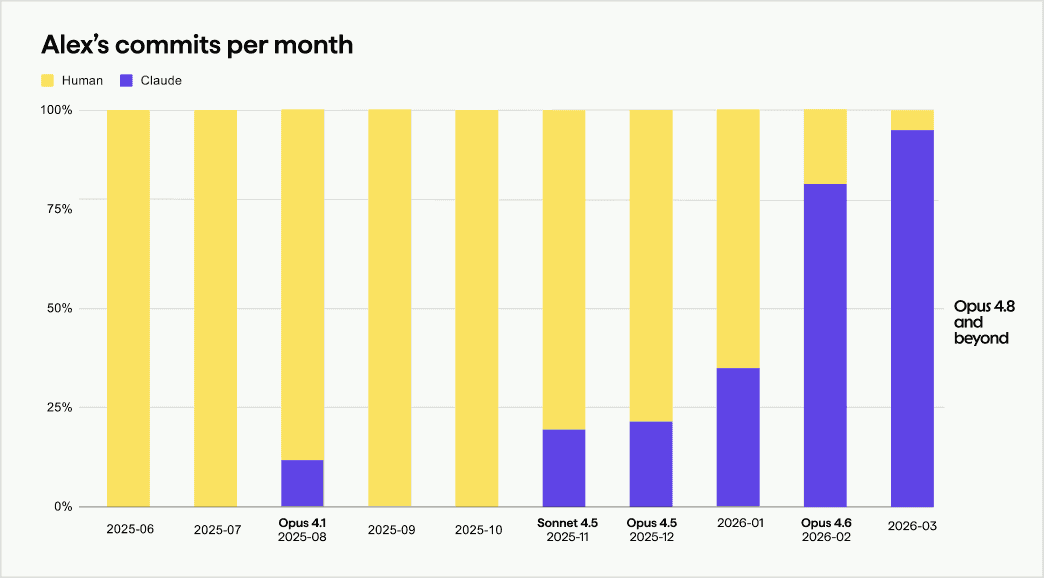
Claude is now fully integrated into our workflow, writing first drafts of code which go through a rigorous review process and then get signed off by a senior developer. The latest AI models are consistent enough to make this possible.
To be clear, consistent doesn’t mean top-tier output. Claude’s output is never groundbreaking or novel, but it does a consistently average job most of the time. For a small company like us, consistently average is fine when the alternative is nothing.
When “fine” is good enough
While we would never let Claude run loose and code everything unsupervised, we use it to lay the groundwork. Then, a senior developer goes in, reviews the code, and either approves it or gives in-line feedback. If that sounds like managing a junior developer, well, that’s how we see it.
Small startups can leverage AI for “good enough” until they have the budget to invest in something better. Sometimes, we need to put on our operations hat to oversee that Claude is doing what we want it to do.
The infinitely scalable junior
To us, the skill cap for Claude is a junior employee that’s eager for a promotion. It wants to do a good job, often makes mistakes, and over-explains what it does. Going into it with the mindset that we are managing a junior helps us set our expectations and be more patient with the tool.
Junior employees need more oversight, feedback, and hand-holding. This is how we treat Claude. Giving in-line feedback and asking it to explain its process helps us get the best results. If we’re not constantly asking it to explain the problem and the solution back to us, then it may end up with a bad version of the wrong solution.
Don’t take this the wrong way. We would never advocate for using Claude to replace an actual junior employee. While it sounds tempting to investors, a good junior will level up their skills and eventually become more talented than AI. And they can continue using AI as an extension of their workflow.
If you have the budget and need to expand, you should be investing in your human workforce. An AI model like Claude just extends your abilities, almost like an assistant for every employee of your organization.
Using AI to fill the gaps
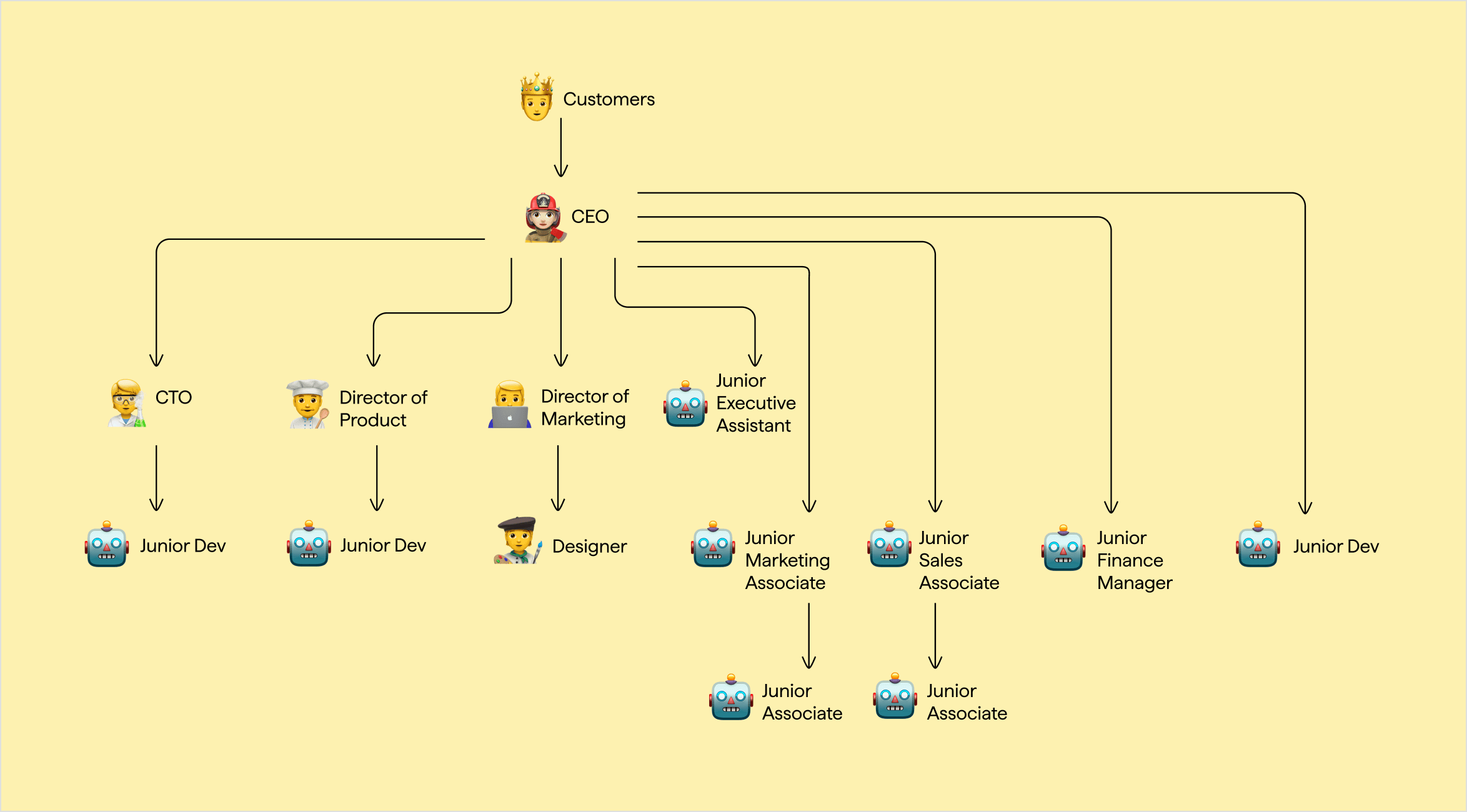
Teak is a small company, but we can act like a much bigger company with AI. It’s used in virtually every department of Teak. From bookkeeping and coding to marketing and project management, AI helps us smooth out processes, transfer data, and do a lot of the grunt work.
Like we said before, it’s a bridge to get from where we are to where we want to be. We think AI can be valuable for companies that want to scale, but don’t have the resources yet to do so.
Distilled down, it’s like this:
We don’t expect AI to do everything for us.
We do expect AI to be useful in some cases.
We don’t expect AI to work unsupervised.
We do expect it to help push work through.
The main idea is to right-size our expectations when it comes to AI.
We don’t expect AI to do everything for us
Just because it can doesn’t mean it should
It is tempting for business leaders these days to throw AI at everything. Got a marketing problem? Use AI to create assets. Got a coding problem? Use AI to solve it. Got an organization problem? Use AI to sort it.
But remember, AI is a bridge, not an endpoint. If you’re throwing AI at marketing without marketing experts, then you’re effectively sabotaging your efforts by having an inconsistent brand expression.
If you’re using AI for coding without human oversight, there’s a pretty good chance your code will be buggy and you’ll have no idea why.
To make matters more complicated, an LLM like Claude will often gaslight you before finally finding the problem, and then the process of fixing it becomes even more cumbersome.
This is why we don’t use AI to solve problems without an expert to frame the problem and check the output. This can be anything from coding a new product feature to writing a blog post. While either task can technically be completed by AI, it will be mediocre at best—and inaccurate gibberish at worst.
Expectations are key
AI is a useful tool. But that’s all it is—a tool, not a silver bullet. It should only be used as part of your employees’ repertoire of tools to solve their problems. That’s why it’s important to level-set your own expectations for what it is able to achieve.
If you’re testing out AI at your company, we suggest setting clear expectations with your employees to help them understand how to use it. And if they decide that AI doesn’t help them do their job better, then trust their judgment.
It’s okay for AI not to be good at everything. At the end of the day, it’s just another tool.